Why Cybersecurity Sales Cycles Are So Long (And How to Shorten Them)
If you speak to almost any cybersecurity founder, CRO, or sales leader, you’ll hear the same frustration:
“We generate interest… but deals take forever to close.”
Opportunities enter the pipeline.
Discovery calls go well.
Demos are positive.
And then:
Momentum slows.
Weeks pass.
More stakeholders appear.
Procurement gets involved.
Internal reviews begin.
What looked like a 60-day deal becomes a 6–9 month cycle.
This isn’t a failure of sales execution.
It’s the reality of how cybersecurity is bought.
To shorten sales cycles, companies must first understand why they are long in the first place.
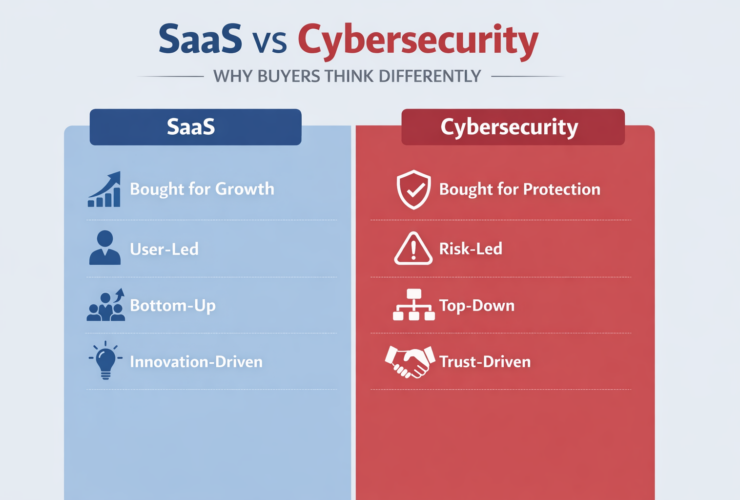
Cybersecurity Is Not Bought Like Software
Most SaaS products are purchased to improve performance:
Increase productivity
Enable growth
Improve efficiency
Cybersecurity is purchased to prevent failure:
Avoid breaches
Reduce liability
Protect operations
That distinction matters.
Growth decisions move fast.
Risk decisions move cautiously.
Security buyers are not asking:
“Will this help us move faster?”
They’re asking:
“What happens if this fails?”
That question alone introduces deeper scrutiny and slower decision-making.
Security Is a Multi-Stakeholder Decision
Many SaaS tools are purchased at the department level.
Cybersecurity rarely is.
Security decisions typically involve:
CISO
CIO
Risk teams
Procurement
Legal
Finance
Board-level stakeholders
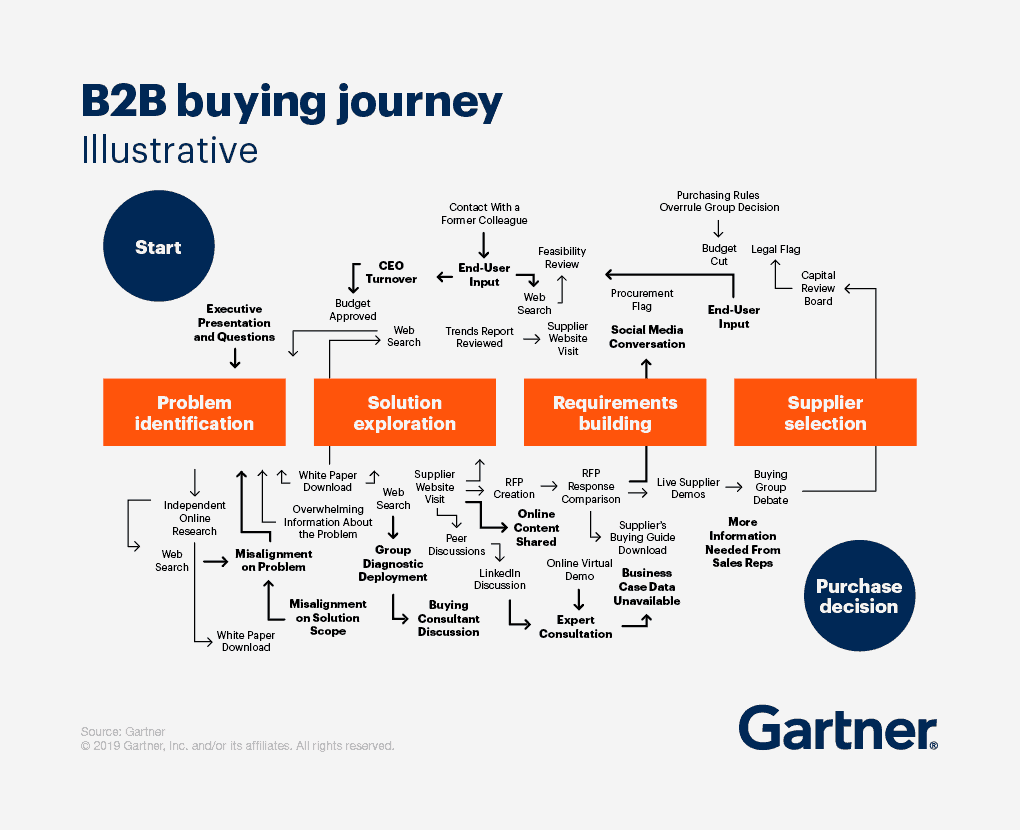
Each group evaluates the decision through a different lens:
Technical
Operational
Financial
Governance
Which means the buying process isn’t just about interest.
It’s about alignment.
And alignment takes time.
The Purchase Carries Personal Risk
Buying marketing software rarely carries career consequences.
Buying cybersecurity often does.
If a chosen solution fails, the impact can include:
Operational disruption
Regulatory exposure
Financial loss
This introduces an emotional layer to decision-making.
Security buyers must trust not just the technology — but the vendor behind it.
Trust is not built in a demo.
It is built through:
Reputation
Proof
Case studies
Credibility
And trust-building extends timelines.
Procurement Is Part of the Process
Cybersecurity purchases are frequently tied to:
Compliance
Insurance
Regulation
Governance
Which means procurement and legal involvement is almost inevitable.
Once these teams enter the process, timelines expand due to:
Security questionnaires
Legal reviews
Contract negotiations
Policy checks
This is normal.
But companies that are unprepared experience avoidable delays.
Budget Often Needs to Be Created
Unlike SaaS purchases that sit within pre-allocated departmental budgets, cybersecurity investments are often triggered by:
Audit findings
Board concerns
Risk exposure
Compliance requirements
In these situations, budget must be justified internally.
Your deal is not just competing against other vendors.
It is competing against:
Other internal priorities.
Helping buyers build a business case is essential to progress.
Consensus Is the Real Bottleneck
Cybersecurity deals rarely stall due to lack of interest.
They stall because stakeholders are not aligned.
Technical teams may support the solution.
But finance may need cost justification.
Risk teams may require validation.
Legal may require assurance.
Without consensus, deals pause.
And the larger the organisation, the more alignment is required.
Messaging Can Slow the Cycle
Feature-led messaging may resonate with technical teams.
But executives care about:
Risk reduction
Operational continuity
Financial exposure
If marketing does not translate technical capability into business impact, internal buy-in becomes harder.
And when alignment is difficult, decision-making slows.
Security messaging must move beyond:
Features
to:
Business outcomes.
CRM Often Reflects the Wrong Reality
Many cybersecurity companies structure their pipeline like SaaS:
Lead → Demo → Proposal → Close
But real security deals move through:
Risk validation
Stakeholder alignment
Budget justification
Procurement approval
If CRM does not reflect this journey, deals appear “stuck” when they are actually progressing internally.
Better visibility leads to better management — and shorter timelines.
How Cybersecurity Companies Can Shorten Sales Cycles
You cannot remove complexity.
But you can reduce friction.
Organisations that shorten sales cycles tend to:
Lead with risk, not features
Support internal business cases
Build trust early
Map the buying committee
Structure CRM around real decision stages
The goal is not speed for its own sake.
It is clarity.
Clarity accelerates alignment.
Alignment accelerates decisions.
Final Thought
Cybersecurity sales cycles are long because security is not a simple purchase.
It involves:
Risk
Trust
Governance
Responsibility
Companies that accept this reality — and align marketing, messaging and CRM accordingly — move from:
Unpredictable pipeline
to:
Structured progression.
And in cybersecurity, predictability is a competitive advantage.